
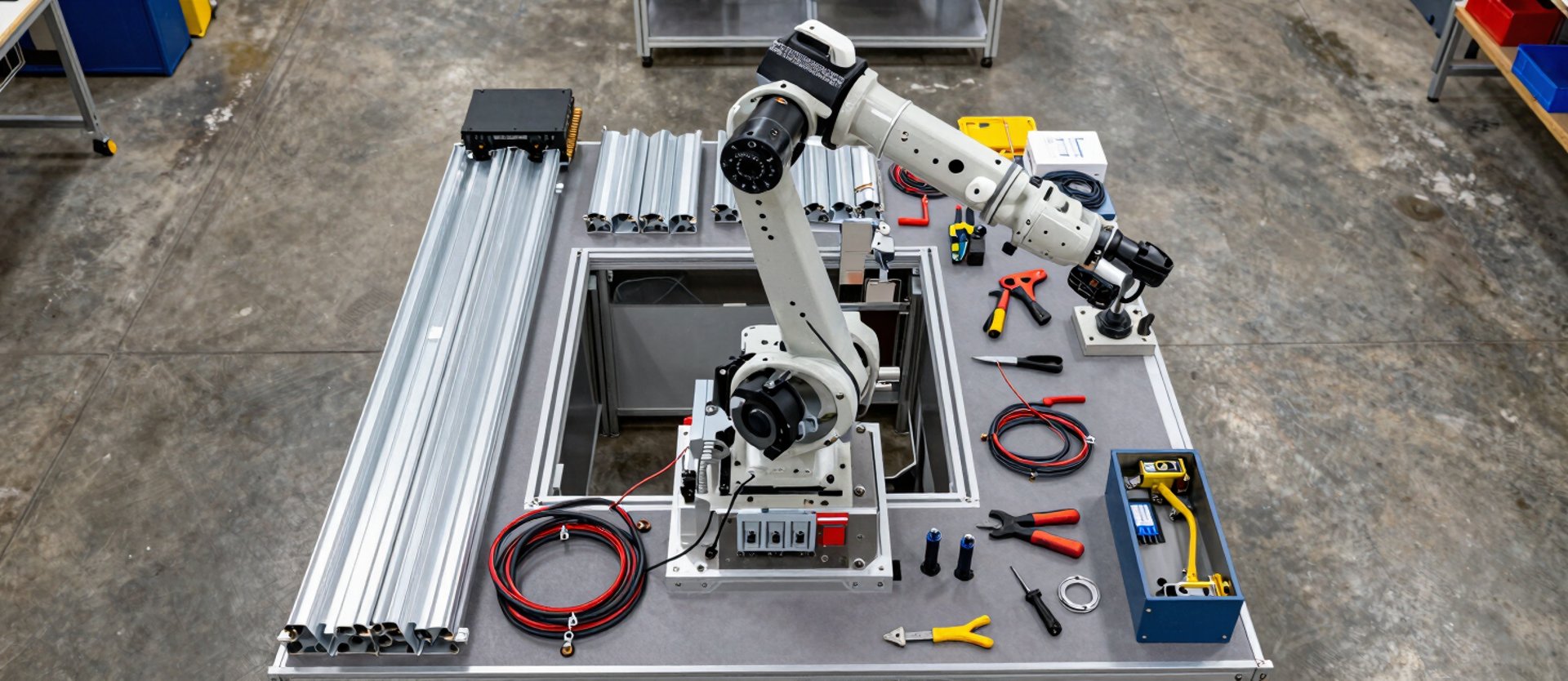
Every constraint shaped a decision
A full record of how this robot was designed, rebuilt, and reasoned through—subsystem by subsystem.
Trade-offs that shaped each mechanism
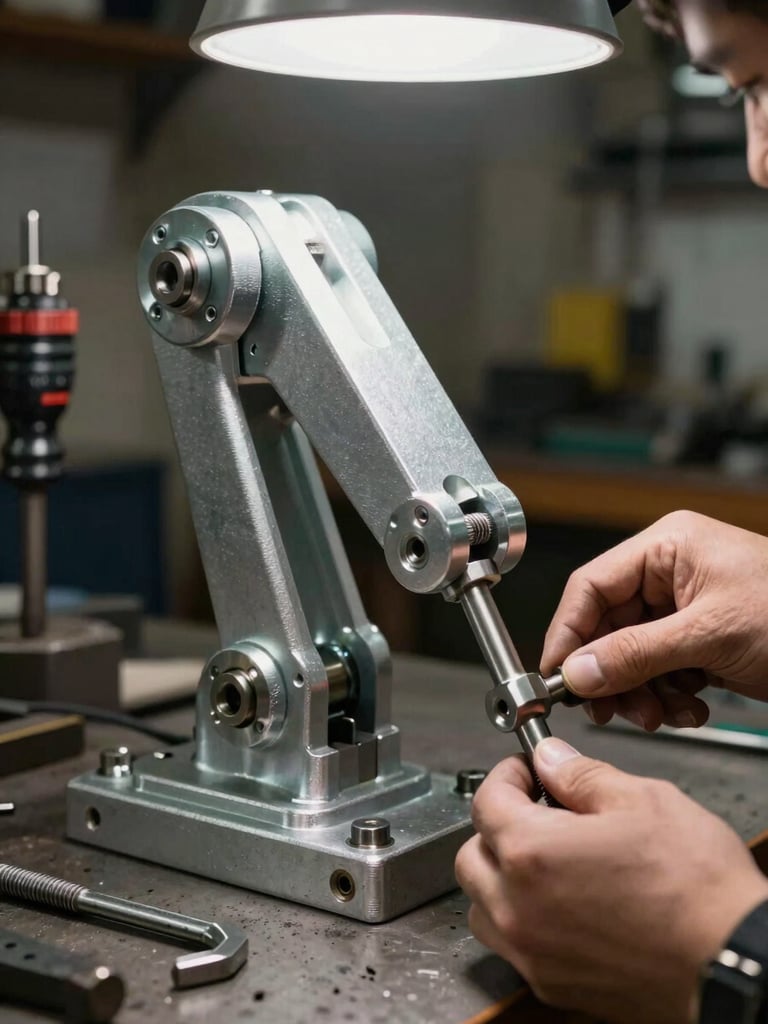
Weight limit forced a four-bar geometry
The original single-pivot arm exceeded the 18-inch extension rule under full load. Switching to a four-bar linkage kept reach within bounds while preserving the scoring height we needed.
CAD modeled three pivot offsets before settling on 38 mm. The physical build matched within 2 mm—the gap is documented in the iteration log.
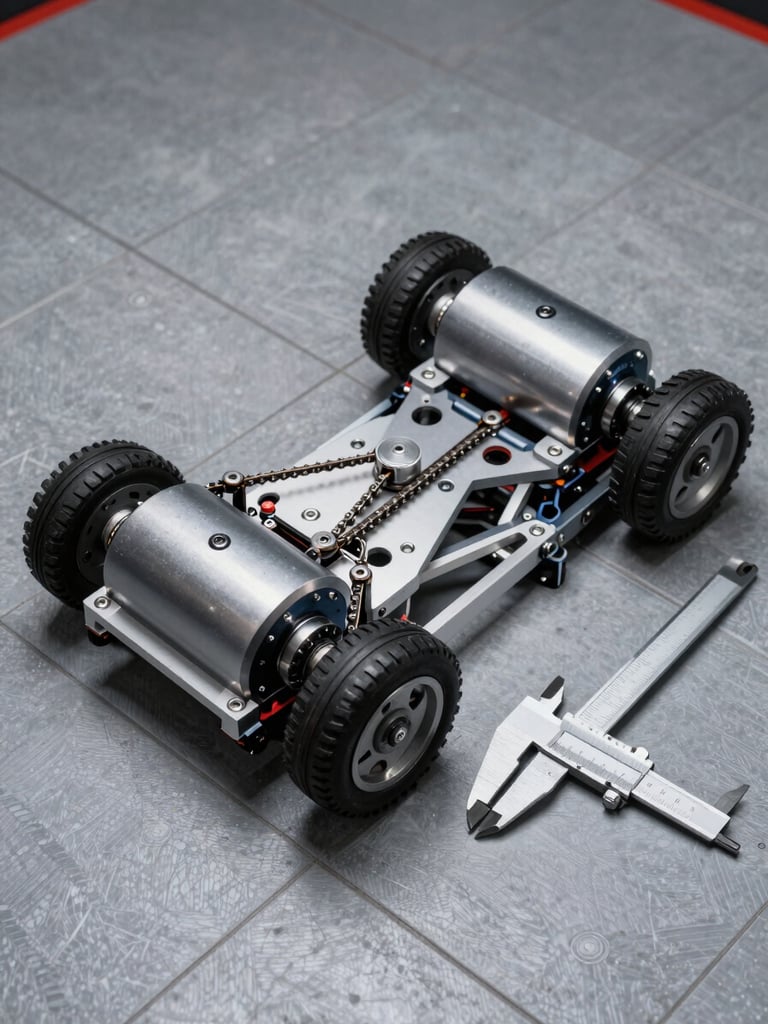
Field friction ruled out mecanum early
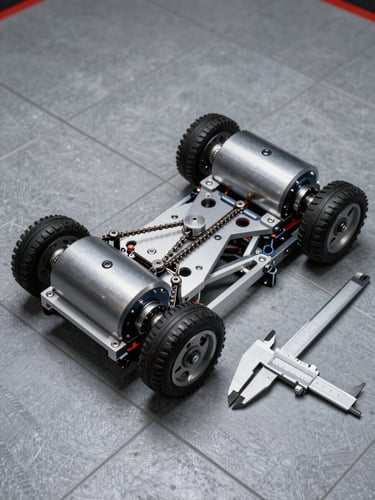
Mecanum wheels offered omnidirectional movement but lost 30 percent traction on the competition tile texture we measured. We chose tank drive with a differential to retain reliable pushing force.
Gear reduction was set at 13.7:1 after timed runs showed the original 19.2:1 was too slow for autonomous repositioning.
Three builds, each failure documented
Proof of concept—structural failure at load
Aluminum gussets—wiring routed wrong
Competition-ready, with known next steps
The first chassis used 1/8-inch polycarbonate gussets. Under competition load cycles, two gussets cracked at the bolt holes within six test runs. Documented, photographed, replaced.
Replacing polycarbonate with 1/16-inch aluminum solved the structural issue. The cable run from the control hub to the arm motor was then too short for full extension—rerouted in v3.
Cable management resolved; arm repeatability within 3 mm across 50 cycles. Two open items remain for next season: encoder drift at low battery and intake grip on wet game elements.
The full design review is open
Every trade-off, every dead end, and every revision note is written up—available to prospective members, sponsors, and anyone who wants to see how a constraint became a feature.